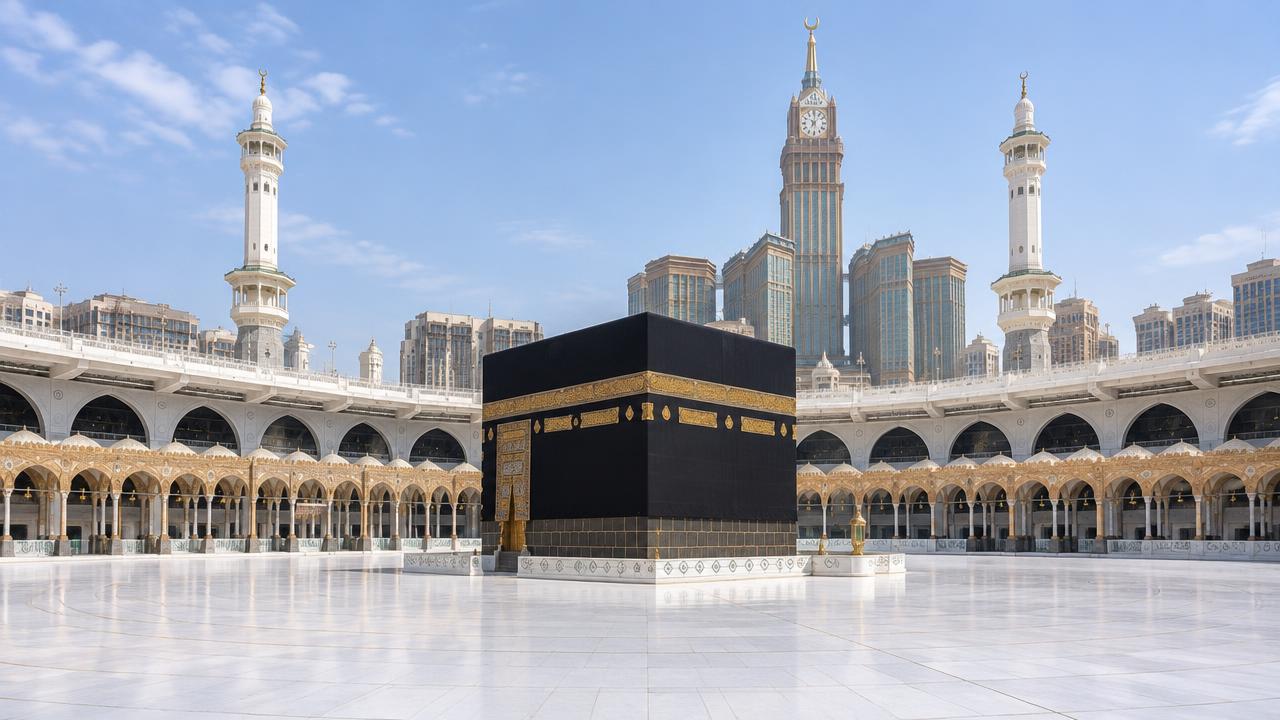
Lesson 14 · Tahallul; Tawaaful Widaa
Completing Umrah with shaving or clipping the hair, then the farewell tawaf and leaving Makkah without superstitions.
Imam Sheikh Omar Effendi · 2 November 2026 · 64 min
In summary
Imam Sheikh Omar Effendi explains how taḥallul completes ʿUmrah and how ṭawāf al-wadāʿ marks departure from Makkah in Lesson 14 of the Umrah 2026 series at Durbanville Islamic Society. He reviews the essential rites and their sequence, describes shaving or shortening the hair, and encourages gratitude for completing the pilgrimage. He distinguishes essential, voluntary, and farewell ṭawāf, attributing the obligation of farewell ṭawāf to Imām al-Shāfiʿī while explaining exemptions for menstruation and postnatal bleeding. He also discusses additional worship in Makkah, practical departure arrangements, and the importance of following revealed guidance rather than superstitions, including the practice of walking backwards away from the Kaʿbah.
Key takeaways
- 01The teacher lists iḥrām with intention, ṭawāf, saʿī, taḥallul, and tartīb—the prescribed sequence—as the five essentials of ʿUmrah.
- 02Entering iḥrām commits the pilgrim to completing the rites; merely removing the clothing does not end that state.
- 03For taḥallul, he teaches that men preferably shave or otherwise shorten their head hair, with a minimum of three hairs, while women gather their hair and clip a fingertip’s length.
- 04He instructs pilgrims to have their hair cut by someone outside iḥrām and recommends that women arrange their clipping privately, such as in their hotel room.
- 05He encourages pilgrims to express gratitude after completing ʿUmrah and use their remaining time for Qurʾān, worship, and beneficial companionship.
- 06He distinguishes essential ṭawāf associated with Ḥajj or ʿUmrah from voluntary ṭawāf, which consists of seven circuits without an accompanying saʿī.
- 07He attributes to Imām al-Shāfiʿī the ruling that ṭawāf al-wadāʿ is wājib for departing pilgrims without a valid excuse, and to Shāfiʿī scholars the exemption without compensation for women experiencing ḥayḍ or nifās.
- 08Departure preparations should precede farewell ṭawāf; he says unnecessary shopping or social visits afterward require repeating it, unlike brief delays for prayer or journey necessities.
- 09He rejects walking backwards away from the Kaʿbah and other departure superstitions, emphasizing that piety lies in consciousness of Allah rather than invented customs.
Mentioned in this lesson
- Qurʾān 3:97: clear signs at the Sacred House.
- Qurʾān 2:158: al-Ṣafā and al-Marwah among Allah’s sacred symbols.
- Qurʾān 2:189: entering houses through their doors and observing taqwā.
- Ibn ʿUmar (raḍiyallāhu ʿanhumā): the Prophet ﷺ and companions shaving or shortening their hair.
- Ibn ʿAbbās (raḍiyallāhu ʿanhumā): women shorten rather than shave their hair.
- Muʿāwiyah (raḍiyallāhu ʿanhu), reported through Ibn ʿAbbās: shortening the Prophet’s ﷺ hair with a blade.
- Ibn ʿAbbās (raḍiyallāhu ʿanhumā): the Sacred House should be the pilgrim’s final obligation before departure.
- ʿĀʾishah (raḍiyallāhu ʿanhā): Ṣafiyyah (raḍiyallāhu ʿanhā) permitted to depart after completing ṭawāf al-ifāḍah.
- Imām al-Shāfiʿī and Shāfiʿī scholars: farewell ṭawāf and exemptions.
- Ṣaḥīḥ al-Bukhārī, al-Barāʾ ibn ʿĀzib (raḍiyallāhu ʿanhu): entering houses from the back and the revelation of Qurʾān 2:189.
Something to reflect on
How can preparing for taḥallul and farewell ṭawāf help you complete ʿUmrah with gratitude, sound understanding, and freedom from inherited superstitions?
Did you know?
- • Tartīb—the prescribed sequence—is itself one of the five essentials of ʿUmrah listed in the lesson.
- • Voluntary ṭawāf consists of seven circuits without an accompanying saʿī.
- • The lesson encourages pilgrims to fill their remaining time in Makkah with Qurʾān, worship, and beneficial companionship.
Test yourself
0/21Quiz
1. How many essentials of ʿUmrah does Imam Sheikh Omar Effendi list?
2. What does the teacher recommend men preferably do for taḥallul?
3. How does the teacher instruct women to clip their hair for taḥallul?
4. According to the lesson, who should cut a pilgrim’s hair for taḥallul?
5. What response does the teacher encourage after completing ʿUmrah?
6. What does merely removing the iḥrām clothing do?
7. Which description of voluntary ṭawāf matches the lesson?
8. To whom does the teacher attribute the ruling that farewell ṭawāf is wājib for departing pilgrims without a valid excuse?
9. Which group does the teacher say Shāfiʿī scholars exempt from farewell ṭawāf without compensation?
10. Which situation does the teacher say requires repeating farewell ṭawāf?
True or false
The teacher gives a minimum of three hairs when discussing men shortening their hair for taḥallul.
The teacher recommends that women arrange their hair clipping privately, such as in a hotel room.
Departure preparations should be left until after farewell ṭawāf.
A brief delay for prayer after farewell ṭawāf requires repeating it.
The teacher rejects walking backwards away from the Kaʿbah as a departure custom.
Match-up
Tap a term, then its meaning.
Share this lesson
WhatsAppMore from Umrah 2026
- Lesson 15 · The Solaah of the Traveller (Musaafir): Qasr Solaah
Imam Sheikh Omar Effendi · 9 November 2026 · 56 min
- Lesson 13 · Sa'i: Procedure & Shuroot; Adaab of Drinking Zamzam
Imam Sheikh Omar Effendi · 26 October 2026 · 67 min
- Lesson 12 · Tawaf: Shuroot and Sunnan
Imam Sheikh Omar Effendi · 19 October 2026 · 76 min
- Lesson 11 · Arriving in Makkah and Beginning Tawaf
Imam Sheikh Omar Effendi · 12 October 2026 · 72 min
- Lesson 10 · Preparing for Ihram: Miqat, Intention, Prayer and Talbiyah
Imam Sheikh Omar Effendi · 5 October 2026 · 61 min
- Lesson 9 · Umrah Preparation: Miqat Rules, Departure Etiquette and Travel Supplications
Imam Sheikh Omar Effendi · 21 September 2026 · 62 min
- Lesson 8 · Ihram: the Miqat (Demarcation of Place)
Imam Sheikh Omar Effendi · 14 September 2026 · 60 min
- Lesson 7 · Bab al-Umrah: Hajj, Umrah & the Arkan of Umrah
Imam Sheikh Omar Effendi · 7 September 2026 · 59 min
- Lesson 6 · Special Circumstances in Hajj/Umrah: Women in Iddah, Children & Badal
Imam Sheikh Omar Effendi · 31 August 2026 · 68 min
- Lesson 5 · Women: Travel Rulings & the Mahram
Imam Sheikh Omar Effendi · 17 August 2026 · 62 min
- Lesson 4 · Umrah and Concern for the Elderly
Imam Sheikh Omar Effendi · 10 August 2026 · 56 min
- Lesson 3 · The Shurut of Umrah/Hajj & Istita'ah
Imam Sheikh Omar Effendi · 3 August 2026 · 56 min
- Preparation for Umrah
Imam Sheikh Omar Effendi · 20 July 2026 · 54 min