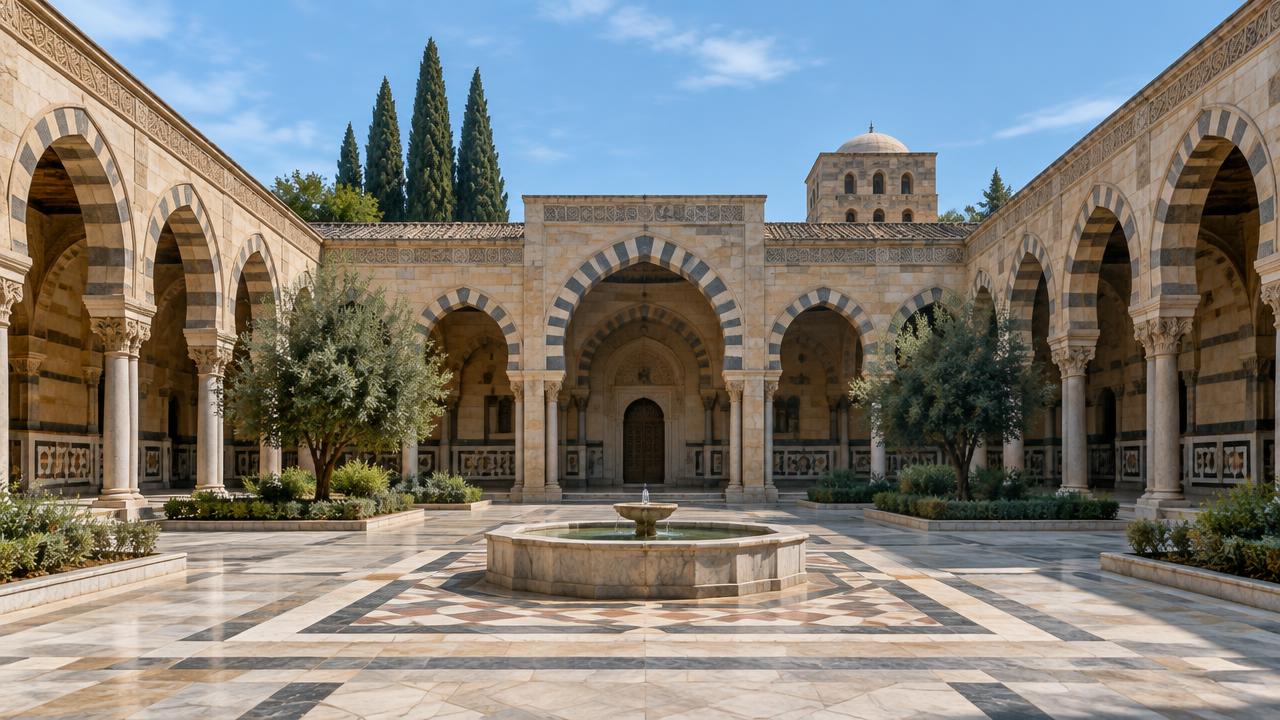
Lesson 54 · The Death of Yazid
The invasion of Madinah, attack on Makkah, caliphate of Abdullah ibn Zubayr and regrouping of the Umayyads.
Imam Sheikh Omar Effendi · 21 October 2026 · 55 min
In summary
In Lesson 54, Imam Sheikh Omar Effendi traces the turmoil following the martyrdom of Sayyidina Husayn (may Allah be pleased with him), including attacks on Madinah and Makkah and Yazid’s death. He then follows competing claims to leadership and movements seeking vengeance, urging students to learn from past decisions while leaving judgment of hearts to Allah.
Key takeaways
- 01The lecturer connects leadership to obedience to Allah and His Messenger (peace and blessings be upon him), while reserving detailed discussion of its limits.
- 02He cautions against judging intentions and acknowledges conflicting and fabricated accounts surrounding Karbala.
- 03He presents the killing of Sayyidina Husayn, the assault on Madinah and the bombardment of Makkah as three major catastrophes associated with Yazid’s rule.
- 04In his account, Yazid’s death interrupts the siege of Makkah and prompts the attacking army’s withdrawal.
- 05He describes Muawiyah II’s withdrawal from leadership and growing allegiance to Sayyidina Abdullah ibn al-Zubayr (may Allah be pleased with him).
- 06He traces renewed Umayyad power through Marwan ibn al-Hakam’s victory at Marj Rahit and the succession of Abd al-Malik ibn Marwan.
- 07He presents the Tawwabun as a penitential movement responding to its members’ failure to support Sayyidina Husayn; their reported conditions for forgiveness are not established here as religious teaching.
- 08He introduces Mukhtar al-Thaqafi’s pursuit of vengeance and political influence; his judgments concern this historical narrative, not a basis for generalizing about Shia Muslims.
Mentioned in this lesson
- Primary material: Cape Muslim Connect, Lesson 54, “The Death of Yazid,” Imam Sheikh Omar Effendi, 21 October 2026; supplied transcript, duration 55:23.
- Qur’an: quoted passages on obeying Allah, the Messenger and those in authority; Adam’s (peace be upon him) prayer for forgiveness; and Allah’s knowledge of hearts. Verse references were not supplied.
- Supplication invoking Allah as the Turner of hearts and asking for steadfastness, including for children; no collection specified.
- Seerah and historical accounts: invoked generally without named works. Reports about military events, atrocities, succession and individuals’ motives remain unverified in the supplied material.
- Report concerning a “ram” through whom Makkah’s sanctity would be violated: attributed by the lecturer to prophetic foretelling; transmission and source unspecified and unverified.
- Imam Ahmad ibn Hanbal (may Allah have mercy on him): a statement questioning love for Yazid is attributed to an unspecified book; attribution unverified here.
- Statements about scholarly differences being a blessing and learning from those who have died: mentioned as hadith or scholarly teaching without identifiable references; prophetic attribution unverified.
Something to reflect on
How can we learn from the consequences of leadership decisions while checking reports carefully and avoiding judgments about hearts or whole communities?
Did you know?
- • The notes connect historical leadership decisions with lessons for students today.
- • Marj Rahit marks a turning point in the notes’ account of renewed Umayyad power.
- • The Tawwabun are introduced as a penitential movement.
Test yourself
0/21Quiz
1. Who presents Lesson 54?
2. Whose martyrdom precedes the turmoil explored in this lesson?
3. Which city’s sanctity is highlighted in the second chapter?
4. In the lecturer’s account, what interrupts the siege of Makkah?
5. Who is described as withdrawing from leadership?
6. To whom does the lecturer describe growing allegiance?
7. Which sequence appears in the account of renewed Umayyad power?
8. What prompted the Tawwabun’s penitential movement?
9. Which approach to accounts surrounding Karbala does the lecturer recommend?
10. How should the lecturer’s judgments about Mukhtar al-Thaqafi be understood?
True or false
The lecturer connects leadership to obedience to Allah and His Messenger (peace and blessings be upon him).
The lecturer treats every account surrounding Karbala as reliable.
The assault on Madinah and bombardment of Makkah are among the catastrophes associated with Yazid’s rule.
The Tawwabun’s reported conditions for forgiveness are established in these notes as religious teaching.
The lecturer urges students to learn from past decisions while leaving judgment of hearts to Allah.
Match-up
Tap a term, then its meaning.
Share this lesson
WhatsAppMore from Islamic Civilization
- Lesson 57 · The Rise and Fall of Hajjaaj ibn Yusuf ath-Thaqafi
Imam Sheikh Omar Effendi · 11 November 2026 · 61 min
- Lesson 56 · The Appointment of Caliph Abdul Malik ibn Marwan; The Destroyer
Imam Sheikh Omar Effendi · 4 November 2026 · 56 min
- Lesson 55 · The Revolt of the Ummah & the Rise of Mukhtar al-Thaqafi
Imam Sheikh Omar Effendi · 28 October 2026 · 56 min
- Lesson 53 · The Caliphate of Yazid: Three Calamities
Imam Sheikh Omar Effendi · 14 October 2026 · 56 min
- Lesson 52 · The Caliphate of Yazid ibn Muawiyah
Imam Sheikh Omar Effendi · 7 October 2026 · 56 min
- Lesson 51 · The Umayyad Dynasty
Imam Sheikh Omar Effendi · 16 September 2026 · 57 min