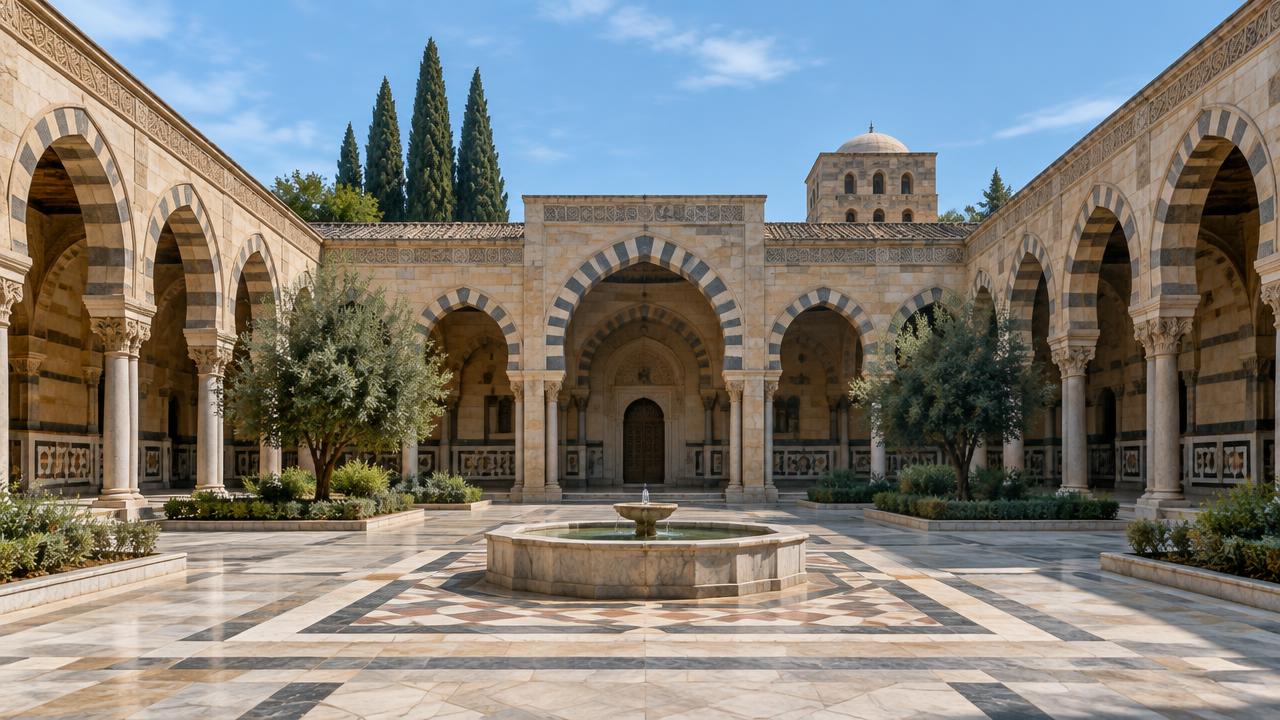
Lesson 53 · The Caliphate of Yazid: Three Calamities
Umayyad Dynasty: the martyrdom of Sayyidina Husayn and the Ahl al-Bayt at Karbala, and the destruction of Madinah.
Imam Sheikh Omar Effendi · 14 October 2026 · 56 min
In summary
The lesson recounts the martyrdom of Sayyidina Ḥusayn رضي الله عنه and members of the Ahl al-Bayt at Karbalāʾ, emphasizing steadfastness, betrayal, and responsibility under Yazīd’s caliphate. It cautions against fabricated historical reports and introduces the second calamity—the destruction of Madinah—while preparing for discussion of bloodshed in Makkah; these later events are not fully narrated in this excerpt.
Key takeaways
- 01Kūfah’s invitations encouraged Ḥusayn رضي الله عنه to travel, but intimidation under ʿUbayd Allāh ibn Ziyād caused support to collapse; Muslim ibn ʿAqīl was killed.
- 02At Karbalāʾ, water was withheld from Ḥusayn’s party. The lecturer contrasts outward religious observance with cruelty and diseased hearts.
- 03Ḥusayn رضي الله عنه proposed returning, meeting Yazīd directly in al-Shām, or withdrawing somewhere peaceful. These proposals were rejected in favour of humiliating submission.
- 04Ḥusayn رضي الله عنه allowed his companions to leave and spent the final night praying and comforting them. Many members of the Ahl al-Bayt were subsequently killed.
- 05Al-Ḥurr ibn Yazīd sought forgiveness and joined Ḥusayn’s side, describing his decision as choosing Jannah over Jahannam.
- 06The lecturer warns that accounts of Karbalāʾ contain conflicting versions and fabrications, including disputed claims about the burial of Ḥusayn’s head.
- 07Yazīd’s absence from the killing does not remove his responsibility, the lecturer argues: he appointed the officials involved and did not punish Ibn Ziyād.
- 08The aftermath included surviving women and children being taken to Kūfah and the emergence of al-Tawwābūn, the penitents. Learning about sectarian differences should promote understanding and guidance, not fault-finding.
Mentioned in this lesson
- Qurʾān, Sūrat al-Baqarah: hypocrisy and sickness of the heart.
- Prophetic report concerning the red soil and Ḥusayn’s future martyrdom; no collection specified.
- Reports from Anas ibn Mālik رضي الله عنه and ʿAbd Allāh ibn ʿUmar رضي الله عنه concerning the Prophet’s ﷺ love for his grandsons.
- Ibn Hishām, named as a historical source; no work specified.
- Unnamed historical narrations and scholars, including differing burial accounts.
- Shīʿī sources, explicitly cited for ʿAlī Zayn al-ʿĀbidīn’s rebuke of Kūfah’s mourners.
- A report attributed to ʿAlī رضي الله عنه concerning a man whose presence would occasion violation of Makkah’s sanctity.
Something to reflect on
How can we ensure that outward religious observance is accompanied by compassion, moral courage, and refusal to support injustice?
Did you know?
- • Al-Tawwābūn means “the penitents.”
- • Al-Ḥurr ibn Yazīd described his choice as choosing Jannah over Jahannam.
- • The lesson encourages understanding and guidance, not fault-finding, when studying sectarian differences.
Test yourself
0/21Quiz
1. Where was Sayyidina Ḥusayn رضي الله عنه martyred?
2. Which city's invitations encouraged Sayyidina Ḥusayn رضي الله عنه to travel?
3. What was withheld from the party of Sayyidina Ḥusayn رضي الله عنه at Karbalāʾ?
4. Who sought forgiveness and joined the side of Sayyidina Ḥusayn رضي الله عنه?
5. How did Sayyidina Ḥusayn رضي الله عنه spend the final night?
6. What caused support in Kūfah to collapse?
7. Which option correctly lists the three proposals of Sayyidina Ḥusayn رضي الله عنه?
8. What caution does the lecturer give about accounts of Karbalāʾ?
9. Why does the lecturer argue that Yazīd remained responsible despite his absence from the killing?
10. What contrast does the lecturer draw from the cruelty at Karbalāʾ?
True or false
Sayyidina Ḥusayn رضي الله عنه allowed his companions to leave.
The three proposals of Sayyidina Ḥusayn رضي الله عنه were accepted.
Surviving women and children were taken to Kūfah.
The excerpt fully narrates both Madinah's destruction and the bloodshed in Makkah.
Learning about sectarian differences should promote understanding rather than fault-finding.
Match-up
Tap a term, then its meaning.
Share this lesson
WhatsAppMore from Islamic Civilization
- Lesson 57 · The Rise and Fall of Hajjaaj ibn Yusuf ath-Thaqafi
Imam Sheikh Omar Effendi · 11 November 2026 · 61 min
- Lesson 56 · The Appointment of Caliph Abdul Malik ibn Marwan; The Destroyer
Imam Sheikh Omar Effendi · 4 November 2026 · 56 min
- Lesson 55 · The Revolt of the Ummah & the Rise of Mukhtar al-Thaqafi
Imam Sheikh Omar Effendi · 28 October 2026 · 56 min
- Lesson 54 · The Death of Yazid
Imam Sheikh Omar Effendi · 21 October 2026 · 55 min
- Lesson 52 · The Caliphate of Yazid ibn Muawiyah
Imam Sheikh Omar Effendi · 7 October 2026 · 56 min
- Lesson 51 · The Umayyad Dynasty
Imam Sheikh Omar Effendi · 16 September 2026 · 57 min